For most of my working life, when someone asked me why I was saving, I would give one of the answers all of us are taught to give without really thinking about them. For a house. For the children's education. For retirement. These were respectable answers. They were the right shape of answer. They were also, I now suspect, not actually true.
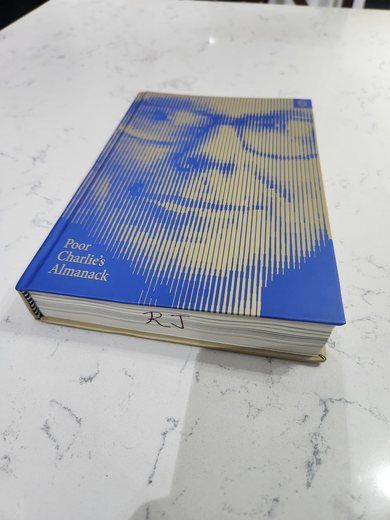
The real answer was hidden, and Charlie Munger, in Poor Charlie's Almanack, gave me the word for it.
"I wanted the independence. I desperately wanted it. I thought it was undignified to have to send invoices to other people."
I read that line and recognised the feeling immediately. I had not been saving for any of the textbook reasons. I had been saving — without ever quite saying it to myself — to one day not need to answer to anyone's schedule but my own. Or, to put it less elegantly, to one day not need to be in any meeting I did not myself care about.
What I had been calling prudence was actually a quiet plan for freedom.
Munger calls this the only worthwhile reason to want money. Not for Ferraris, not for status, not even for security in the way most people mean it. For independence. For the moment when you can wake up on a Tuesday morning and decide what you will spend the day doing, and that decision is not influenced by what someone else's agenda needs you to do.
Bill Ackman, the hedge-fund founder, told an interviewer the same thing, almost word for word: "The most important personal driver for me very early on was independence. I wanted to be independent." I have read this sentence many times now from many different people, and the word that keeps appearing is independence. It is the quiet engine behind almost every story of someone who chose to do the hard, unglamorous work of accumulating capital instead of spending it.
The piece that stopped me even harder was Munger's friend, the investor Thomas Kahn, who put it this way: "You build capital and then you can do whatever you want, because you're independent."
That sentence is the whole thing. It explains why I save in a way that the textbook answers never quite did.

Felix Dennis, the British magazine publisher who built and sold a media empire and ended his life as one of the richest men in Britain, says the same thing more bluntly in How to Get Rich. Most people, he warns, will never become genuinely free, because they are paid for renting out their time, not for owning anything. The only path to real wealth — the kind that gives you back your own days — is ownership. A piece of the business you build. A stake in something that goes on producing value while you sleep. Never settle for wages alone, he says, and he repeats it often enough that the line stops being advice and starts feeling like a warning.
Twenty years of ownership
Reading Dennis at forty-two made me realise something about my own working life that I had been doing for twenty years without quite naming.
I had co-founded a small software company in 2006, when I was twenty-three, with three partners. By any technical measure I had been an owner all along — equity, decisions, the whole arc of building something we collectively held. But the truth is that for most of those years I had been doing the ownership in the way one does most things in one's twenties and thirties: without a clear idea of what the ownership was for. I built the company. I drew an income from it. I made decisions that were within the comfortable arc of what was expected of a co-founder. The freedom Dennis talks about — the freedom that gives you back your own days — was technically available to me in a way it would not have been to a pure employee. I had just never thought to use the ownership that way. I was, much of the time, an owner who behaved like an employee of his own company.
What changed in my early forties is that I started, in addition, to build something that was entirely mine — not shared with partners, not voted on, not negotiated. A website, written one slow article at a time. The site you are reading this on. I am not trying to make money from it. The books I have spent the last year and a half reading have given me far more than I expected, and writing some of it down felt like the smallest way to pass on what I had been lucky enough to find. If even one person reads an article here and is nudged toward a book they would not otherwise have picked up, that is more than enough. There is something specific, though, about projects you are the sole author of that even partnership ownership had never given me. Every word — chosen by me, owned by me, accountable only to me. No editor, no committee, no quarterly review. That is a strange and powerful thing to discover at forty-three, and it is the closest I have come — in this lifetime so far — to understanding what Dennis meant.
What money is for
There is also a passage in Poor Charlie's Almanack where Munger is asked, in the deepest sense, what money is for. He answers as bluntly as he ever does. "Life is more than being shrewd in wealth accumulation." And the author sets next to it a parallel quote from Bob Marley — a reporter once asked Marley if he was a rich man, and Marley replied, "My richness is life, forever."
I came up out of that page changed. Not because I learned something new. Because somebody had finally said out loud the thing I had been quietly believing for years without admitting it.
Money is not the point. Money is a tool. The point is the kind of life the money lets you live. If you have not actually decided what kind of life that is — what your version of "I want to be independent" actually looks like — then the saving is just a habit without a destination. (Which is, I now realise, exactly what I had been doing for fifteen years before I started reading these books.)
The first thing to decide is not how much money you want. It is what you would do if you had enough of it that nobody could tell you what to do anymore.
The day I sat down with a notebook and answered that question honestly was the day my saving started feeling like building something, rather than just storing it.
For me — and the answer will be different for everyone, which is exactly the point — the honest list was short. Time with Reeba and the boys, without the small urgencies that fill most days. Mornings I spent reading before the house woke up. The slow building of small things I was the sole author of. A few long, undignified motorcycle rides in the south. Books, always more books than I would ever finish. The freedom to be at home on a Tuesday afternoon if one of the boys needed me, and not have to ask anyone for permission to be there.
None of that requires Felix Dennis money. Most of it requires far less than most of us think. But you only realise that once you sit down and write out the list — and you can only write out the list once you understand that the saving was never about the saving. The saving was about buying back the days.
— Rex
A side-piece adjacent to Book of Books — The Things That Struck Me. The numbered series starts with Part 1 — The book that taught me about wanting and continues with Part 2 — The book that taught me about compounding. The longer essay this all grew out of is here: Make Money While You're Young.