I started saving small amounts in my mid-twenties — somewhere around twenty-six — and I kept it up, in a quiet, unremarkable way, for the fifteen years that followed. Some months I put away a little more, some months a little less, and a small portion of it slowly started finding its way into a couple of modest mutual fund SIPs. By any reasonable measure I was being a financially responsible adult.
But there was a thing I never sat with — a piece of math sitting at the heart of saving that nobody had ever bothered to explain to me, and that I had never thought to ask about. The thing I never sat with was compounding.
The eleven words
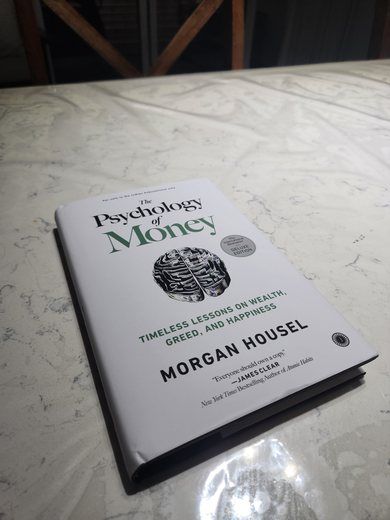
Morgan Housel writes, in The Psychology of Money, that the math of compounding is "not intuitive." That's a careful phrase from a careful writer, and the more I sit with it the more apologetic it feels — like he is sorry on behalf of every adult who never sat us down at twenty and explained that the most powerful force in our financial lives is one almost nobody talks about properly.
The line that finally pinned it for me was Charlie Munger's, which Housel quoted in passing:
"The first rule of compounding is to never interrupt it unnecessarily."
Eleven words. The whole story is in there.
To understand why that sentence is so devastating, you have to understand what compounding actually does. Your investment doesn't grow — it grows what's already grown. The first year, ten percent on ten thousand rupees gives you a thousand. The second year, ten percent of eleven thousand gives you eleven hundred. The third year, twelve hundred and ten. Numbers like that look like nothing — until you fast-forward twenty years, and the original ten thousand has become roughly sixty-seven thousand, all from doing nothing except not interrupting.
Now imagine you started at twenty-two. Now imagine you started at thirty-five. Now imagine — and this is the part that hurts — that you started at twenty-two but pulled the money out at twenty-eight for a wedding, started again at thirty, pulled it out at thirty-four for a car, and started again at thirty-six.
The graph of someone who never interrupted and the graph of someone who interrupted three times look like two completely different lives. Same intention. Same money. Catastrophically different outcomes.
What it cost me, and what I'm doing about it
I was forty-one when I read Housel. I had been saving — yes — but in the smaller, unstructured way of someone who had never sat down to actually do the math. I had not understood what fifteen years of consistent, modest contribution could really become if the compounding was respected. I had interrupted, too — small interruptions, here and there, for various "good reasons." The grief was a specific one. Not that I had done nothing for fifteen years. But that I had been doing something for fifteen years without ever really knowing what it could become.
And then I did the only thing left to do.
I doubled down on the SIPs I had been quietly running for years. Increased the amounts. Set up the auto-transfer on salary day so the decision was made once and never again. The compound math, which I had been ignoring for fifteen years without realising it, now had real numbers behind it. I started buying small amounts of stocks and mutual funds for my two boys. Strictly speaking the investments sit in my own account — their PAN card applications had hit a bureaucratic snag I eventually stopped trying to fix, and I decided that beginning the practice mattered more than the paperwork. (Indian rules do allow a minor to have a demat account, but it must be opened and operated by a parent or guardian until the child turns eighteen. The simpler version, for our purposes, was just to invest for them through my own account.) The investments are mine on paper. They are theirs in every other sense. Each transaction — date, name, units, NAV — they enter by hand into the notebooks I bought them. I cannot give them back the years that compounding gave Munger. But I can give them the next forty years. Which is not nothing.
The math is about time
What I want every person in their twenties to understand about Munger's eleven words is that they are not really about money. They are about time. About the fact that time, applied to even small amounts, becomes geometric — and the only way to access that geometric outcome is to refuse the dozens of small temptations that ask you to interrupt the math.
The wedding fund you raid. The SIP you pause for six months "until things stabilise." The portfolio you sell when the market panics. Each of these is an interruption, and each interruption is a small mathematical theft from a future version of yourself.
You will not feel the theft today. You will feel it at fifty-five, when someone you went to college with retires comfortably and you are still calculating how many years you have left to keep going.
The kindest thing you can do for the fifty-five-year-old version of yourself is to start now, with whatever you have, and refuse to interrupt.
— Rex
Part 2 of Book of Books — The Things That Struck Me. Earlier in this series: Part 1 — The book that taught me about wanting. If you'd like the longer essay this series grew out of, it's here: Make Money While You're Young.