A small confession before we start
I was not a reader. For most of my life, the moment I opened a book I'd be asleep within ten minutes. Couch, bed, anywhere — it didn't take.
Then I turned forty-one. One of my closest friends, Jins Thomas — same college, same hostel for four years, friends since the year 2000 — was on our weekly call. He lives in Vietnam now, and every weekend we talk about whatever is on our minds: life, money, manifestations, the slow shaping of a future. That call, the conversation drifted to books.
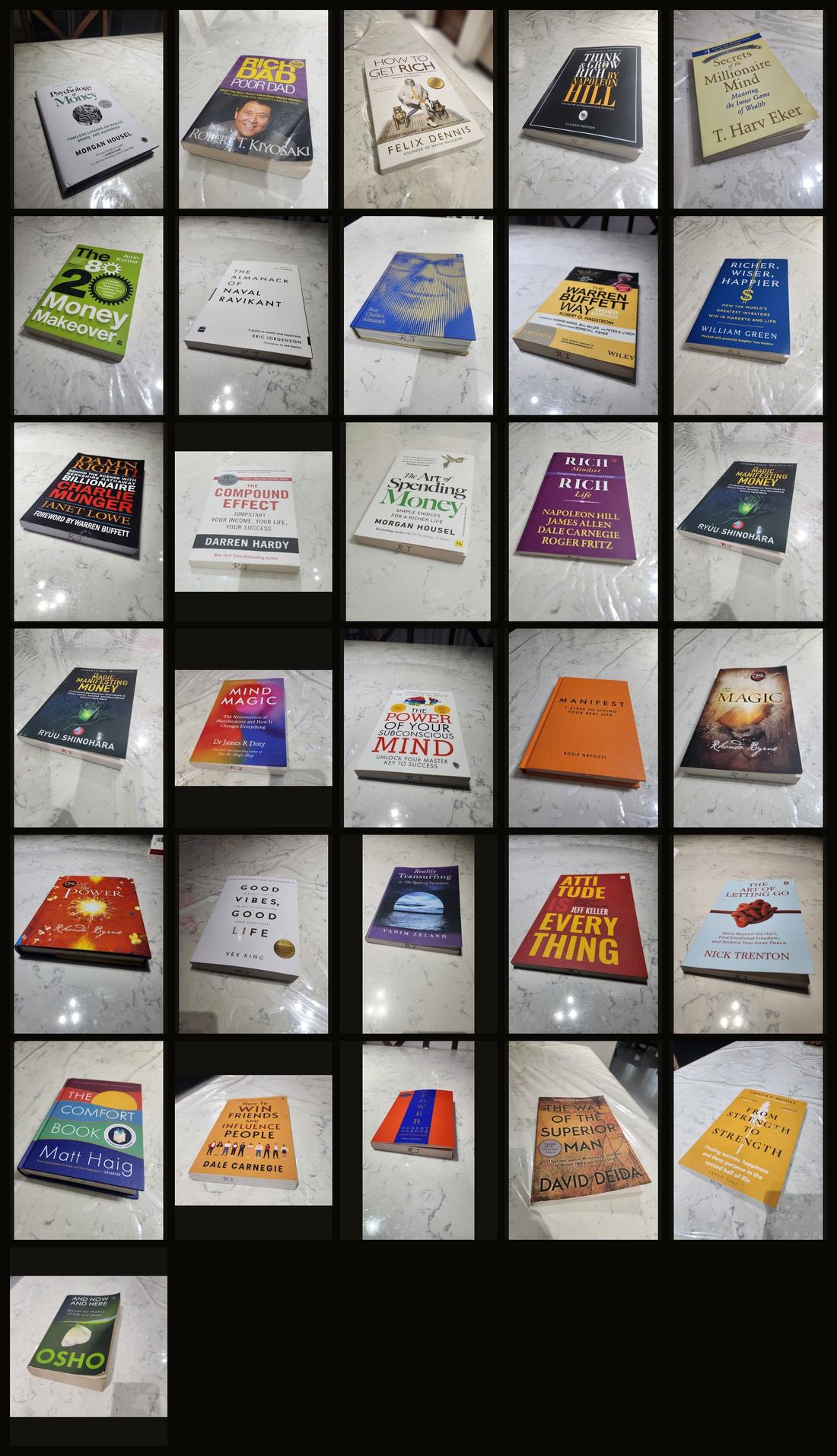
I decided to try reading again. I changed two things — I started waking up at 4:30 AM, and I read for thirty minutes to an hour before the rest of the day began. Slowly, it became a habit. I'm not perfect about it — some days I skip — but on the whole it stuck. Over the last year I've finished thirty-odd books on money, mindset, habits, manifestation and life. They sit at the bottom of this article, the actual copies, photographed on my kitchen counter as I finished each one.
Everything below comes from those books, combined with twenty-two years of actually working, earning, losing, saving and figuring it out the hard way. I started working and earning at twenty-one; I'm forty-three now, so the scars are real ones. If you're young and you've been told reading "isn't really for you", I'll tell you what I wish someone had told me at twenty — I felt the same till forty-one. I just didn't know what I was missing. Pick one book from the list at the end. Read it whenever you can carve out a quiet half-hour. The books do the rest.
Now — the case for wanting money in your youth.
You should want to make money
You've probably been told — gently, with good intentions — that wanting money is greedy or shallow. From the other side of twenty-two years of working, that advice is well-meaning and quietly wrong. Almost every adult I know who is unhappy is unhappy partly because of money: they keep doing work they don't enjoy, in places they don't want to be, around people they didn't choose. Money didn't cause their unhappiness, but more of it would have given them options. Options are the whole game. So this is the case for wanting money — not for greed, but for freedom.
Your age is your biggest asset

If you're twenty-two right now, you have one thing no thirty-five-year-old can buy back from you: time. The kind of time that lets a small amount of money grow into a large amount of money over decades.
A youngster who quietly puts ₹5,000 a month into an index fund from age 22 will usually end up wealthier than someone who starts putting in ₹25,000 a month from age 35. Same effort. Completely different outcome. The younger one just had more time. Charlie Munger put it like this:
"The first rule of compounding: never interrupt it unnecessarily."
That sentence is one of the most expensive things you can ignore in your twenties.
Money is freedom, not show
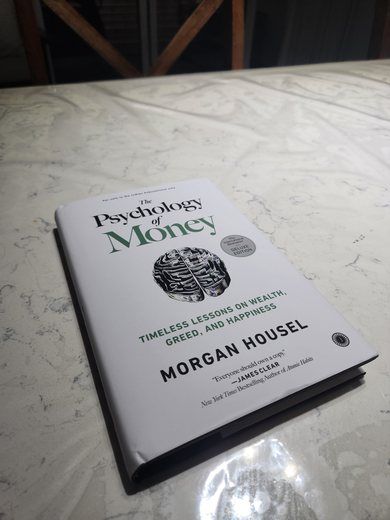
There's a difference between being rich and being wealthy, and confusing the two will quietly ruin you. Rich is the visible stuff — new iPhone, imported sneakers, foreign holiday photos. Most of "rich" is performance, paid for with money that no longer belongs to you. Wealthy is invisible — money sitting in your investments quietly multiplying, the ability to say no to a bad job, sleeping well at night.
Morgan Housel sums it up in one line in The Psychology of Money:
"Wealth is what you don't see."
Half of what looks like wealth on a screen is debt with good lighting.
Mindset is the soil everything else grows in
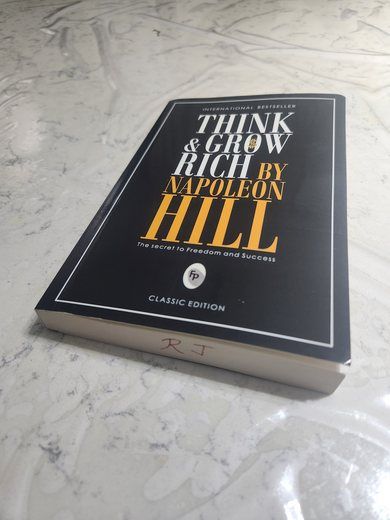
This is the part I would not have believed at twenty, and the part I believe most fiercely now. Your beliefs about money set a ceiling on how much of it you'll keep. If somewhere inside, you think rich people are crooks, or money is the root of evil, or "I'm just not someone who makes money" — you won't become someone who makes money, no matter how much you earn.
Napoleon Hill, in Think and Grow Rich:
"Whatever the mind can conceive and believe, it can achieve."

T. Harv Eker, in Secrets of the Millionaire Mind, sharpens it further:
"Your income can grow only to the extent that you do."
Your income is a number that follows you around. It grows when you grow — in skill, in confidence, in self-belief, in the quality of the people you choose to be around. Most people try to grow the income without growing the person. Reading the right books, slowly, is one of the cheapest and most powerful ways I know to grow the person.
The thing about ownership
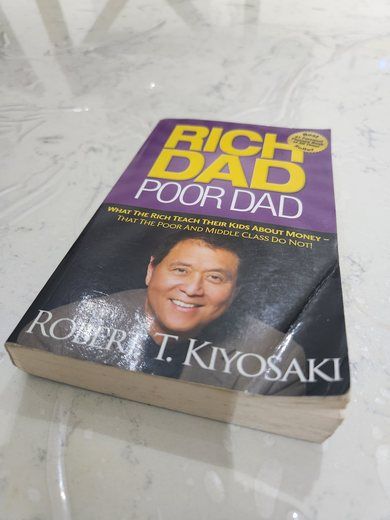
Robert Kiyosaki's Rich Dad Poor Dad gets recommended to every young person, and there's a reason. Strip away the bestseller packaging and one idea remains:
"The rich don't work for money. They make money work for them."
Almost every working adult around you is earning a salary — trading hours for rupees. That trade is fine; we all start there. But the salary stops the moment you stop working. There's a ceiling.

The people who escape it do so by becoming owners — of small businesses, of shares in good companies, of writing, apps, songs, properties, brands. Things that generate income whether or not you showed up that day. Felix Dennis, who built a magazine empire from nothing in his twenties, gives the best one-line piece of advice in How to Get Rich:
"Be bold. Be brave. Don't thank your lucky stars. The stars can't hear you."
Don't wait for luck. Start.
Earn skills, not just marks
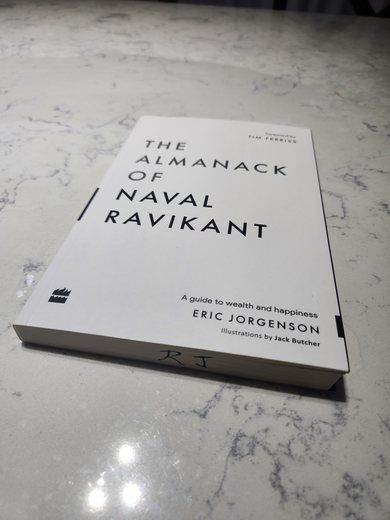
College marks matter, but they aren't the same as becoming valuable. After about age twenty-two, almost nobody asks what you scored. They ask what you can do. Learn to write well in English. Learn to code, even basics. Learn to edit photos and videos. Learn to sell. Learn to make something with your hands. Naval Ravikant puts the right ambition in five words:
"Seek wealth, not money or status."
Money is what you get paid for showing up. Status is what others give you for showing off your money. Wealth is what builds quietly when you own things and your skills compound. Aim for the third.
Save — and keep your savings out of reach
Before you spend on anything else — before food delivery, before shoes, before the phone EMI — set aside a fixed part of what you've earned. Ten percent is the classic figure. Twenty is better.
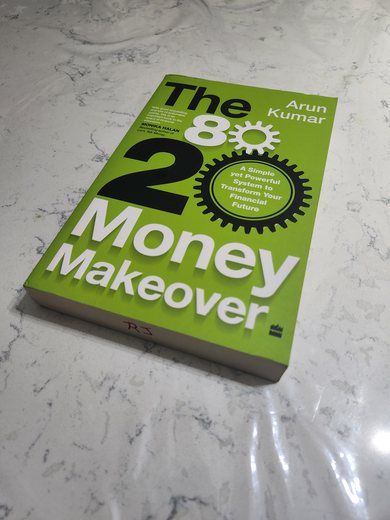
But here's the thing that makes the difference between saving on paper and actually building wealth — keep the money you save in a different bank account from the one you spend out of. Arun Kumar, in The 80-20 Money Makeover, lays out the cleanest version of this for Indian readers. Open a second savings account at a different bank, set up an auto-transfer that moves your savings out on salary day, and don't link a debit card or UPI to that second account. Make spending from it slightly painful — that small friction is the point. As long as spending and saving live in the same place, they're the same money in your head, and the spending wins.
The trap of the credit card
You'll be offered your first credit card within weeks of your first salary. The bank will frame it as a perk. It isn't.
One — credit cards quietly make you spend more. Paying by card hurts less than paying in cash. Over ten years, the ten or twenty percent extra you spend on every transaction adds up to something not small.
Two — the interest is brutal. If you don't pay the full bill and instead pay the "minimum amount due", the rest carries interest of roughly 36–42% per year in India. That is not a typo.
Three — they are designed to feel like your money. They're not. Every rupee on a credit card is borrowed. The trap is "I'll just pay the minimum this month and settle next month." Next month never comes — another expense does.
The rule is short: use one if you must, but treat it exactly like a debit card. Full statement, on the due date, every month, no exceptions. The day you can't, cut it up.
Get term insurance the day you start your first job
A term insurance policy is simply this — you pay a small premium every year, and if you die during the policy term, your family receives a large lump sum. No "returns" if you live, no investment element. It is the cheapest "love insurance" you will ever buy.
Buy it the same month you start your first job — not five years later when you "feel more settled" — because premiums are priced on your age and health. A 24-year-old in good health can buy a ₹1 crore cover for ₹600–₹1,000 a month. The same cover at age 40 with one health issue can cost five times as much, or be refused outright.
A few notes for the Indian market: buy a pure term plan only (avoid endowment, ULIP, money-back, "investment-cum-insurance" — those mix insurance with poor investments). Buy directly from the insurer's website. Get cover of 15–20× your annual income, ideally ₹1 crore minimum. Pick an insurer with a high IRDAI claim settlement ratio. One decision, made once, in the first month of your career. Set it and forget it for thirty years.
A note for parents
One of the audiences I had in mind while writing this is parents — anyone with younger people in their life they want to set up well. After my own boys arrived, I realised the most useful thing I could do for them was not to put more money into their accounts, but to teach them, early, what I had taken forty years to figure out for myself.
I have written about that separately, because it deserved its own piece — the notebooks we built together, the question I ask them before every purchase, and the three-day rule that has worked better than anything else I have tried. If that is relevant to you, the piece is here:
What I'm Teaching My Sons About Money →
What I would tell my younger self
- Open an investment account this week. Start the smallest possible SIP. The habit matters more than the amount.
- Open a second savings account at a different bank. Automate the transfer.
- Read fewer comments and more books. Find a time of day that's quiet and yours, and start.
- Build a real skill before you build a personality.
- Take more risks now. The downside is small and you'll never be this free again.
- Never borrow money to look rich. Buy a term insurance policy in your first salary month.
- Stay close to honest, ambitious people. Respect your parents — but don't outsource your life decisions to them.
Don't be embarrassed about wanting any of this. Greed is wanting money for show. Ambition is wanting money for freedom. Aim for the second.
You have a window — somewhere between fifteen and thirty-five — that is closing slowly whether you act inside it or not. The people who use that window well usually don't look like they're doing anything special. They started early, kept going, and refused to let small temptations interrupt the compounding.
Start something this week. Anything. Just don't let another year of the best decade of your life slip past without using it.
— Rex
The books that shaped this
Every idea above came from one of these — combined with my own scars from getting it wrong over twenty-two years of working. These are the actual copies sitting on my kitchen counter as I finished each one.
If you only read one in your twenties, make it The Psychology of Money by Morgan Housel. If you're an Indian youngster setting up your first salary, The 80-20 Money Makeover by Arun Kumar. If your mindset needs fixing before your money does, Think and Grow Rich by Napoleon Hill, or Secrets of the Millionaire Mind by T. Harv Eker. These four are my personal favourites, along with Rich Dad Poor Dad by Robert Kiyosaki and How to Win Friends and Influence People by Dale Carnegie. After that, pick any one that catches your eye in the photo. Read slowly, whenever you can find quiet.