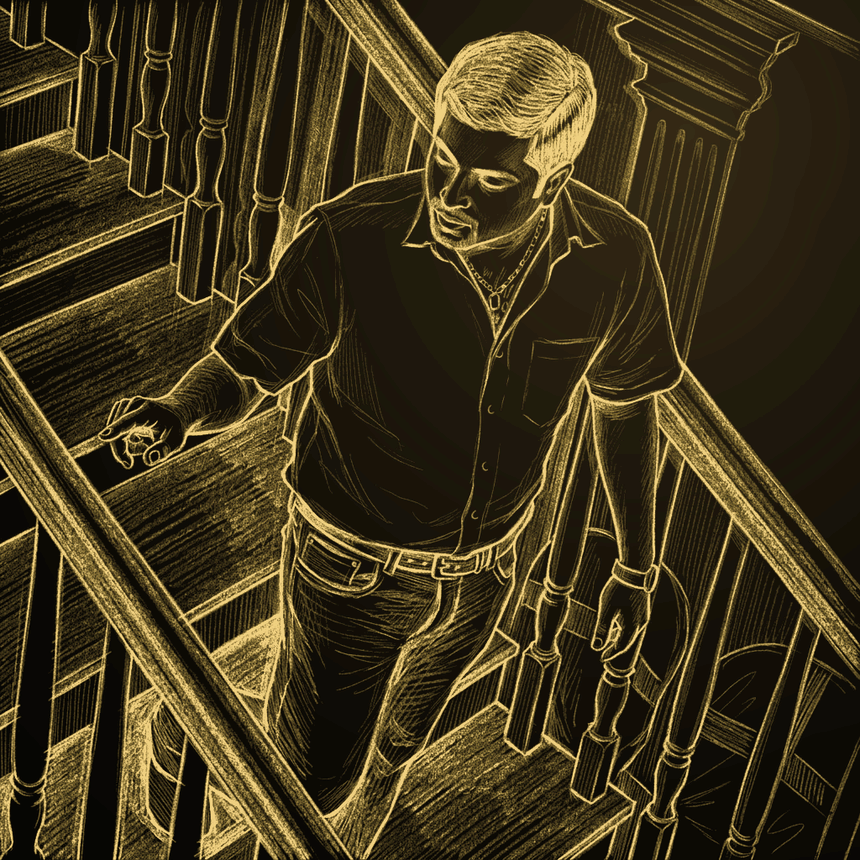
This is an essay I have been putting off for a long time. It is about the biggest financial mistake of my life — a stretch of weeks in 2019 in which I lost a meaningful sum of money I had saved, including the money I had been setting aside in my children's names. I am writing it now because the alternative — leaving it out — would be a small dishonesty about everything else I have written here about money. The story is not a heroic one. It is a story about greed, and about how cleverness fails, and about how the books I have spent the last year and a half reading might have saved me from it if I had read them five years sooner.
This is also a story we do not usually see in the reels and short videos that fill our screens about investing. Those reels show us only the winning side — the screenshots of accounts that have gone up, the testimonials, the trader on a balcony somewhere warm. They almost never show us the much more common losing side, and almost never the inside of a man sitting at a desk at two in the morning wondering how it all went wrong. I think there is a deeper reason for this than the algorithm. It is, simply, human nature to hide our failures and show off our achievements. I have never spoken about any of what follows to anyone, until now. I am writing it here in case one or two people read it and are spared the version of this story they would otherwise have written for themselves.
The temptation
By 2019 I had been saving in small disciplined amounts for ten years. The partnership business I had co-founded with three partners in my early twenties was steady. The stocks I owned were doing — slowly, modestly — what stocks do. I was thirty-six. From the outside, nothing was wrong.
And somewhere in that year, the idea crept in that I had been too patient for too long, that the slow path was for people who did not see the faster one, and that there was a cleverer way to be doing this that I had been missing all along.
That cleverer way, in my mind, was futures and options.
I will not bore you with the technical details. The essential thing to know about F&O is that it is a way of placing bets on the future direction of stocks — usually with much more money than you actually have — in the hope of multiplying small amounts of capital into large ones in days or weeks, rather than the years that patient investing demands. It is also, statistically, the way most retail traders in India lose money. SEBI has since published numbers suggesting that nine out of every ten retail F&O traders end the year in a loss. I did not know that figure in 2019. I was, as it turned out, one of the nine. If I had known the number at the time, I am not sure it would have stopped me — but it might at least have given me pause.
What I knew was that the brokerage apps were getting very good at showing me that this trade, the one I was about to make, was very likely to work.
I started small. I told myself I was being careful. The first few weeks went well — small bets, small wins. The number in the account went up slightly. The feeling that came with it was unlike anything the patient stock-buying had ever produced. It was fast. It was bright. It told me, in that specific way that wins of this kind always tell you, that I had figured out the thing other people were too cautious to see.
So I put in a little more. And won again.
And put in a little more. And won again.
And then, because the small wins had given me a confidence I had not earned, I put in much more.
The slide, and what I reached for
What happened next is the same thing that happens to almost everyone in this story, in roughly the same order. The bets got bigger. The losses started. The losses created a kind of urgency I had not felt about money before — I had to make it back, and quickly, because the only way to fix the damage was to win bigger. So the next bets were larger still, and they lost too. And the ones after that. The arc compresses, in retrospect, into about ten weeks of very bad decisions, each of which felt at the time like the one that would finally turn it around.
There was a point — I remember it vividly — when I sat down at my desk one evening and realised that the money I had been pouring into the trading account, larger and larger amounts each time in the hope of winning my way out of the previous loss, was gone. It was not every rupee I had ever saved — but it was a meaningful chunk of what I had carefully saved, and it was enough to leave a hole I could not ignore. The only way I could see to fill it quickly was to win again.
And then, because the mind in this state does what it does, I reached for the other account.
I had, since the boys were small, been quietly putting small amounts of money aside in their names — partly out of love and partly because of the same quiet plan for the future that had driven my saving since twenty-six. It was not a large sum by any worldly measure. In the way these things are, it was very large to me. It was, more than anything else, a promise.
I reached for it. I told myself it was a loan I would put back. The story I was telling myself, in the small hours of those mornings, was that one more good week of trades would make all of it go away. The boys' money, like the rest of it, was gone within a fortnight.
That is the sentence I have been most afraid to write in any of the writing I have done on this site.
What followed was the worst stretch of weeks of my adult life. Not because of the number — though the number was bad — but because of what I had done. I had taken money that was supposed to belong to two children who had no idea any of this was happening, and I had lost it on bets about which way the stock market would move on a Thursday afternoon.
I did not tell anyone. The shame closed over me with a particular tightness I had not known before. I slept badly. I went through the working hours of my days as though nothing had changed, and I sat in front of the trading screen in the evenings as though watching it would somehow undo what had happened. It did not.
Eventually — and this is the only act of quiet self-respect I will claim for myself in any of this — I put the trading app away. I did not close the account; I simply stopped opening it. I sold the two motorcycles I owned at the time, partly to reduce the gap and partly because I could no longer look at them without remembering the version of myself who had been making decisions in those weeks. And because the bikes had been the whole point of the gear I had bought to film the rides — a mirrorless camera, a GoPro Hero 4 — I sold those too. They would be of no use to me without the rides, and the rides were not coming back any time soon. And I made a single promise to no one in particular: that I would never, for the rest of this life, place another F&O trade.
I have not. The promise has held.
The slow climb back
What I did next was not the right thing — it was just the only thing I could manage. I put the money I had recovered from selling the bikes and the camera gear into a regular savings account, and I left it there. I want to be honest about why. I was not following any strategy. I was simply too frightened to make another decision. The most recent decisions I had made about money had cost me a great deal of what I had carefully saved, and the idea of making any new ones — even good, patient ones, even ones I knew in my head were the right thing — felt impossible to me. So the money sat in the savings account for a couple of months, earning bank interest, doing nothing. I left it alone because I did not yet trust myself to be near it.
Then 2020 arrived, and with it the most extraordinary stretch in the Indian stock market that I have ever lived through. When COVID hit, the market collapsed in March 2020, as markets do when they panic. I watched companies whose stocks I would have bought at any price three years earlier suddenly available at a third or half of what they had been worth. And slowly, over weeks, something started to shift inside me. The fear that had kept me away from the market gave way to a quieter conviction — that this, the moment when everyone else was running away in panic, was the precise opening I needed to make back what I had lost. The money in the savings account, which had felt like the only thing standing between me and complete ruin, suddenly looked like something else: ammunition.
I started buying. Slowly at first, then with more conviction. I want to be careful here, because what I am describing is not skill. It was, mostly, luck. The one thing I want to take credit for is the intuition — somehow, in a way I still cannot fully explain — that my time was finally coming, and that what I had to do was simply hold on until the market recovered. So I held on. I bought what I could afford. I did not look too often.
By the early months of 2021, every rupee I had lost in 2019 — including the money I had taken from the boys' accounts — was not just back where it should have been. It was more. The patient stock-buying through the COVID dip had, in less than a year, made me more than the F&O detour had cost me. By the end of 2021 there was enough left over, after the original gap had been filled, to quietly buy back a motorcycle to replace one of the two I had sold.
I did not feel proud when I saw the recovered balance. I felt lucky. The lesson I will carry until I am old is this: I had the intuition that my time was coming, and I held on. That is the only thing I want to take credit for. Almost everything else was timing I had no business benefiting from.
What I will tell my boys
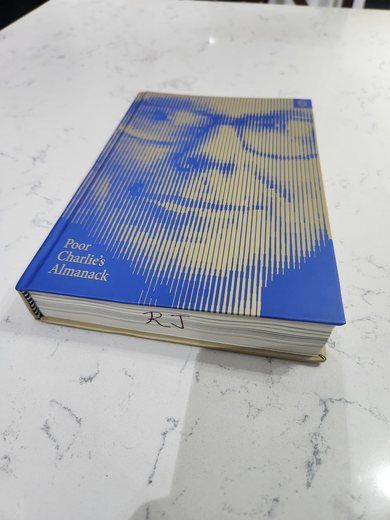
What I did not understand for several more years — until I began reading carefully at forty-one — was that almost every book I would come to love had been trying to warn me about exactly what I did in 2019.
Charlie Munger, whom I now think of as the quietly wisest figure in any of those books, has a single sentence about compounding I find myself coming back to often:
"The first rule of compounding is never to interrupt it unnecessarily."
F&O, I now understand, is the most efficient way ever invented to interrupt compounding (for me). Every trade is a small bet against the patient work the math is doing for you. Most of them lose. The few that win create a false confidence that drives you to make more, until the losses catch up and undo not only the wins but the years of patient compounding behind them. It is the perfect anti-pattern. If a clever person had set out to design a financial product whose explicit purpose was to take patient long-term savers and convert them, one decision at a time, into impatient short-term gamblers — they could not have designed it better than they did.
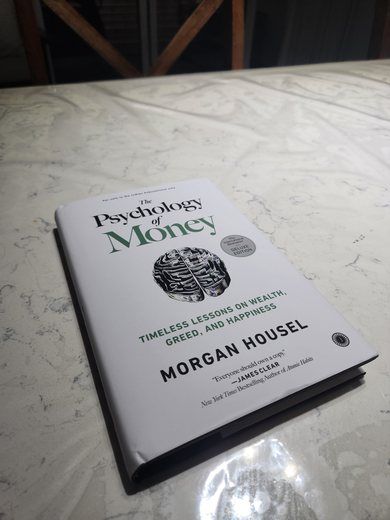
Morgan Housel, in The Psychology of Money, says it more bluntly. The people who quietly build wealth in this world are not the cleverest. They are the most behaviourally patient — the ones who do the slow, boring, dull thing for a long time without interrupting it. I had spent ten years being one of those people without quite realising it. I threw it away in ten weeks trying to be one of the clever ones.
My sons are now fourteen and thirteen. In seven or eight years they will be in their early twenties — the age when the first paycheques arrive, the first decisions about what to do with them get made, and the first shortcuts get offered. They will be offered the same shortcuts I was offered, in more sophisticated apps than the ones I used. They will see the same screenshots of strangers turning a lakh into a crore in three weeks. They will feel, exactly as I felt, that there must be a smart way to do this that the patient adults around them have not noticed.
I cannot stop them from making mistakes. I would not want to. But I can tell them, once and clearly, what I learned the most expensive way I have ever learned anything:
There is no shortcut to wealth that does not, at some point, demand the money back — usually with interest. The patient path is not the path of the unimaginative. It is the path of the people who have already run the experiment of the impatient path themselves, and lost. The slow accumulation of small disciplined amounts, over decades, into things that quietly produce more, is not just one way to become wealthy. It is, statistically, very close to the only way.
The hardest part of telling this story is admitting that I had to lose almost everything I had saved to learn what every patient person I have ever met already knew. The cheapest way to learn it is to be told. The next cheapest is to read about it. The most expensive way is the way I learned. I hope my boys are spared the expensive way.
I have not placed an F&O trade since 2019. I have not been tempted to. The lesson, whatever else it was, was thoroughly delivered. What I learned from those weeks is here, on this page, in case it spares someone else even a single bad decision.
— Rex
A side-piece from Book of Books — The Things That Struck Me. The companion essays are here: The books that taught me what money is actually for and The books that taught me what financial intelligence actually is. The numbered series starts with Part 1 — The book that taught me about wanting and continues with Part 2 — The book that taught me about compounding. The longer essay this all sits beside is Make Money While You're Young.