Every so often your phone hands you something you didn’t ask for and can’t quite shake off. Usually it’s an advertisement for a chair you looked at once, a few minutes ago, and must now apparently be shown every day for the rest of your natural life. This time it was different. It was a little set of pictures, calmly explaining that in a hundred years not one single person scrolling past them — me very much included — would be remembered by anyone at all. Delightful. Right there between a recipe reel and a video of a cat falling off a sofa.
The part that stopped me
The idea stuck to me like a burr. So that evening, halfway through my walk, as one does, I started running the numbers on my own family. It turns out grief-adjacent arithmetic is very easy to do when you have a quiet road and nobody around to stop you.
I’m forty-three. My elder son is about to turn fifteen. Say he marries at twenty-eight — that puts us around 2039 — and has his first child a year or so later. So by roughly 2040 there is a small person calling me grandfather, and I’m fifty-seven. I like that part. Fifty-seven is nothing. I’ll get real years with that grandchild — birthdays, terrible jokes, the whole business — and they’ll grow up knowing exactly who I am.
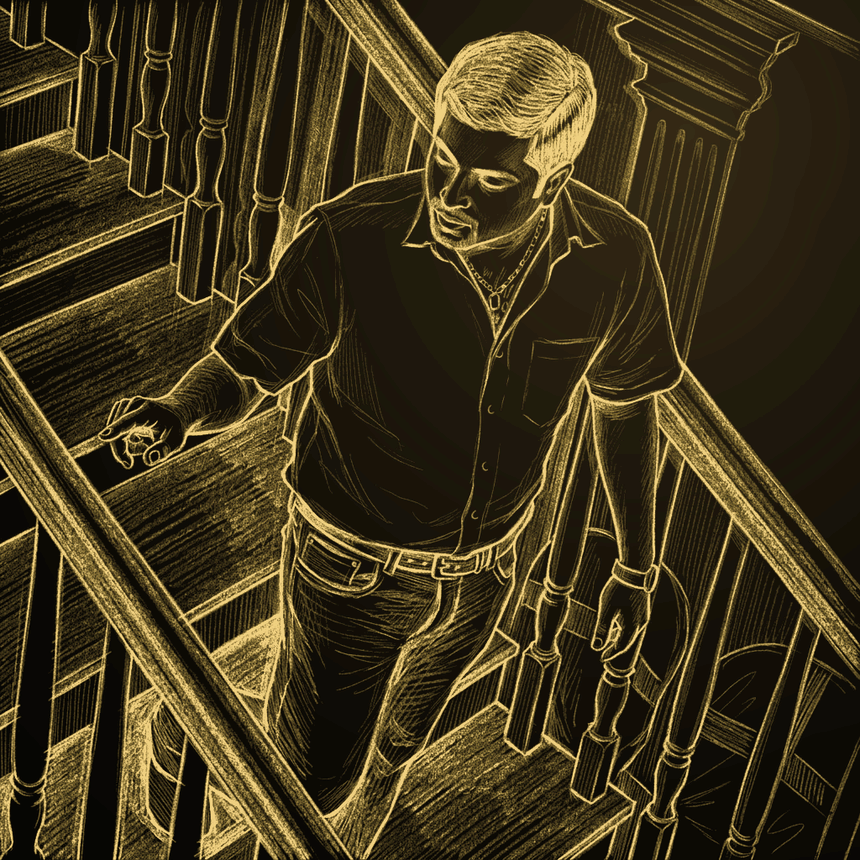
Then I kept walking, and kept going, because I apparently cannot leave a loose thread alone. That grandchild grows up and, on more or less the same schedule, has a child of their own — my great-grandchild — somewhere around 2070. And here is the quiet bit. In 2070 I’d be eighty-seven, assuming I’m still cluttering up the place at all. A great-grandchild who is two or three years old when I go will remember precisely nothing about me. Not my face, not my voice, not one word I ever said. I’ll be a name on a family tree and a face in a photo nobody can quite place. “That’s your great-grandfather. Ran some kind of company, I think.”
And even my grandchild — the one who’ll know me properly — won’t really remember what I did. The company. The deadlines. The problems I stayed up half the night solving, dead certain they were the most important things in the world. To them I’ll just be grandpa, which, I’m slowly starting to suspect, was the only part that was ever going to last anyway.
That’s the honest edge of it. Not some vague, comfortable two hundred years — about forty-four. Two generations of my own blood, and then the tide comes in.
I’d stopped walking somewhere around 2070. A dog two houses down was watching me with real suspicion. I started up again.
The cold feeling came first
My first reaction to all this was not gratitude. There is something genuinely unsettling about reducing your entire existence to an expiry date while out for a pleasant stroll. We spend so much effort trying to matter — to be seen, to be liked, to leave some sort of dent in the world — and here was a friendly little slideshow, ably assisted by my own head, confirming that the dent buffs right out. For a few minutes I walked along feeling like a very temporary arrangement of atoms in reasonably priced shoes.
And then, oddly, relief
But I kept turning it over for the next few days, and a second feeling arrived that I hadn’t ordered. Relief.
Because if everything is going to be forgotten — the proud moments and the mortifying ones in exactly equal measure — then most of what we lug around every single day is far lighter than we treat it.
Think about how much of a life is spent performing for an audience that won’t outlast us. The entire week you once lost to one slightly cold reply. The comeback you rehearsed in the shower for a fight that never happened.
I’ve done every bit of it, and plenty more. As a boy I stood frozen on a school stage while the whole programme fell to pieces around me — all because someone else in the group hadn’t bothered to prepare — and I was certain the entire hall would remember my share of the disaster forever. I didn’t get picked for a school team I badly wanted, and quietly took it as a lifelong verdict on my worth. And at seventeen I earned the chance to fly in front of the Prime Minister of India, then had it taken away at the last moment — a story I’ve told elsewhere on this site — convinced the entire country had watched me lose. Each of those felt, at the time, like something that would trail me to my grave. Not one of them trailed me past the next year.
We’re all in the same small, faintly leaky, perfectly pleasant little boat, paddling like mad to impress one another on the way down.
You were free the whole time
Here is where it flipped all the way over for me.
If being forgotten is guaranteed — and the arithmetic is fairly firm on this — then the point of a life was never to be remembered. It was to be lived. Actually lived, while it was happening, and not quietly filed away as a highlight reel for people who won’t stay to watch it.
The frightening way to say this is none of it will last. The truer way, I’ve decided, is: well then — I was free the whole time, and simply forgot to check.
Free to try the thing I might flop at. Free to say the honest sentence instead of the safe one. Free to stop auditioning for a jury that has, frankly, already left the courtroom. Free to spend an ordinary Tuesday exactly the way I want to — which, if you’ve read anything else on this site, you already know is the one luxury I go on about far too much.
Stop waiting for a day that keeps not coming
What that faintly ridiculous, accidentally profound little slideshow gave me, in the end, was permission. Permission to care a bit less about the verdict and a lot more about the living. Make the call. Take the trip. Build the strange thing only you find interesting. Be, on purpose, a little less careful.
The clock is running for every one of us, and the enormous good news hidden inside that fact is this: since none of it is going on your permanent record — since, it turns out, there is no permanent record — you may as well live the way you actually want to. Not recklessly. Just honestly, and now, instead of saving it for a someday that keeps politely failing to arrive.
A hundred years from now, nobody will remember whether you got it all right.
So you may as well go and live it.