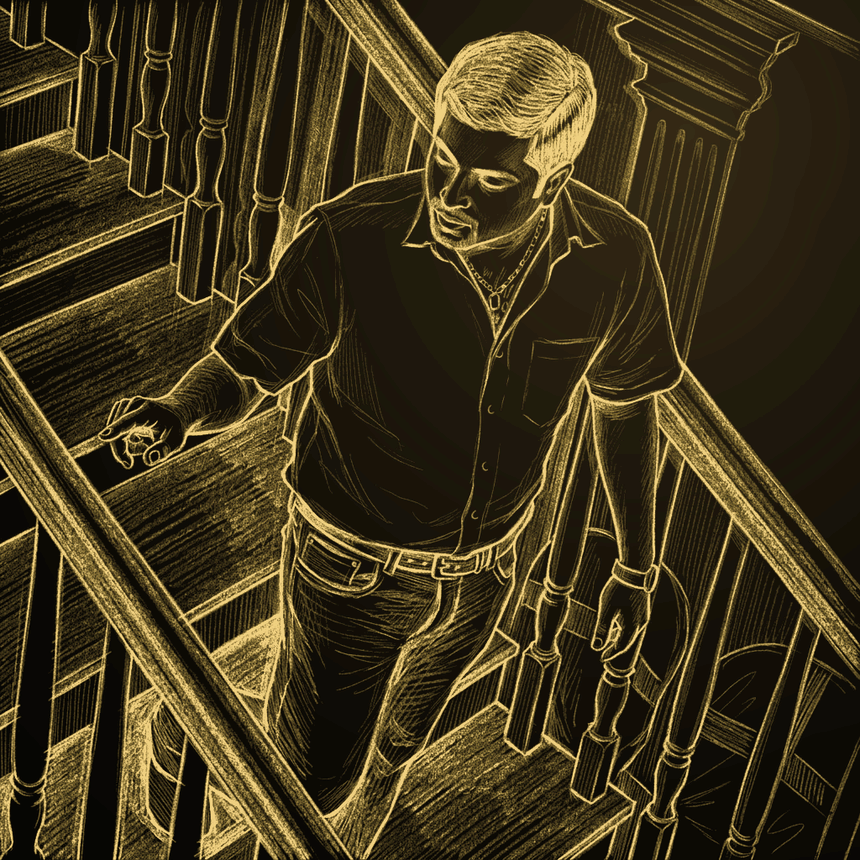
When I was in my second year of pre-degree at Government Arts College in Trivandrum, I was an Air Wing cadet in the NCC. I grew up right next to the Trivandrum airport — close enough to watch planes lift off the runway every single day. More than anything in the world, I wanted to become a pilot.
The camp before the camp
That year I was picked for a special camp: Pre Vayu Sainik Camp 1. It ran for ten days, and we all stayed at the NCC office. Every morning began at six sharp. A Shaktiman truck drove us to the airport, where we trained near the hangar. Inside sat a small Cessna and the NCC’s own Ardhra glider. Mornings were march-past drill until noon. In the afternoons, some of us picked one thing to specialise in — aero-modelling, skeet shooting, or gliding. The others, who had chosen march-past, spent that time on drill, pitching tents, and the rest of it. I picked gliding without thinking twice.
But getting picked was only the beginning. The training was hard from the very first morning, and it was meant to be. Every day pushed a little further than the one before. The mornings meant march-past drill in the sun, right up to noon. But it was the afternoons that really broke you in. The glider was heavy, and it had to be pushed out of the hangar and hauled by hand all the way to the far end of the airstrip. You launched it, flew it — and the moment it landed, you walked it back to the starting point to go again. Somewhere in the middle of all that came the part I was really there for: the training runs inside the cockpit. It was hot, heavy, repetitive work, and every day it quietly tested who really wanted to be there. Nobody warns you how much of it is a filter. You just feel it, in the way the group grows a little smaller around you each time.
After ten days, some of us were kept and the rest went home. A short break later, the second camp began: Pre Vayu Sainik Camp 2. Ten more days — and this time the filter was harsher still. The training was tougher, the judging stricter, and far fewer of us would come out the other side. My trainer was Captain Eugine Khan. On the last day, I was chosen as the main glider pilot for the Kerala boys’ team, with my friend Jagadeesh as backup. In all, twenty-seven of us were picked for the biggest camp of them all — the All India Vayu Sainik Camp.
Five hundred cadets
This national camp brings together around five hundred of the best air cadets in the country. For about ten days, I lived and trained beside cadets from every part of India. The gliding competition ran over two days. My turn came on the second day, around one in the afternoon — in blazing heat.
That heat gave me a problem no one else had to deal with. When the sun heats the ground for long enough, it creates a thermal — an invisible column of warm air that rises up. Fly into it, and instead of coming down, your glider gets pushed higher. But the task was to fly one loop and land inside a box painted on the runway. So I had to lose height, not gain it. To do that, I brought the glider around in two full 360-degree circles (holding one wing low at a fixed point and letting the glider pivot tightly around it, so it stayed over almost the same spot on the ground while it spiralled down and shed the extra height). Nobody else needed to. Captain Khan had taught me how — but only in theory. In Kerala we never flew high enough to practise it, and our airfield sat right by the sea, so we had never once trained in a thermal.
I managed the turns, but I landed just outside the box. I didn’t mind one bit. I had just flown two full circles for the first time in my life, and I was thrilled. Two days later, they read out the results. I had won the gold medal for gliding, and the Air Marshal himself pinned it on me. I had never once imagined finishing in the top three. Just being at that camp had already felt like the whole dream.
The flight that was taken away
Winning brought a reward I never expected. The best boy and girl glider pilots get a place at the NCC Republic Day Camp — the most special camp of all. Its biggest moment is the Prime Minister’s Rally on 28 January. The two of us would train on a microlight aircraft. Then, on the day, we would each fly it alone, land in front of the Prime Minister, step out, and walk up to hand over a bouquet. The training was supposed to start two weeks before.
It didn’t. I kept asking, and every time they told me they would get back to me. My parents had already booked their tickets to Delhi to watch me fly. A week before the event, they finally called me in. Two officers explained the training. A tailor came and measured me for my flying suit. We were told to come back the next day.
The next day, a girl I had never seen before was standing there — in an Army Wing uniform. An officer came over and said, gently, that he had sad news. She would be flying in my place. I asked why. He just said this was how it worked, and that he had to follow orders. My flying suit had already arrived, stitched to my size. They handed it to her. I was told to go back to my barrack.
On my way, I found my Commanding Officer and told him everything. He said he would look into it. That evening, he gave me the answer. The girl was a Brigadier’s daughter. And she wouldn’t even be flying alone — a real pilot would sit beside her. All she had to do was step out and hand over the bouquet. Nothing could be done. This is how it works in the forces, he said. You follow orders.
I didn’t tell my parents. I let them enjoy the trip — see Delhi, visit the Taj Mahal. This was the year 2000. I was seventeen.
Back home, our family, friends and relatives had all gathered around their TV sets to watch the Prime Minister’s Rally live. All they saw were two girls walking up to hand over the bouquet to the Prime Minister of India.
Man proposes
Still, I couldn’t accept it. What stung most was the unfairness of it — I had been set aside for a reason that had nothing to do with me. I don’t remember the exact day it changed. What I do remember is that it took months — not days, not weeks. But slowly, I stopped seeing it as something done to me, and started seeing it as something I could learn from. The lesson was simple: life will not always go the way you want it to.
My father had a saying for moments like this. Man proposes, God disposes. It means you can make all the plans you like, but the final call is out of your hands — call it fate, or luck, or life itself. After that day, I became harder to knock down. I decided I would take whatever came, as it came. I truly believe everything happens for a reason. In my life, everything that happens is one of two things: a good experience, or a lesson. There is no third kind. If it isn’t good, I sit with it until I understand what it was trying to teach me.
What to do when life feels unfair
If you’re a teenager reading this, here is something I wish an adult had told me straight when I was your age: life is going to be unfair to you sometimes, and often there is nothing you can do to stop it. You will work harder than someone and still score less. You will make the team, then lose your spot to someone else. Something you badly wanted will go to a person who didn’t even want it as much. When it happens, it hurts — and it is meant to. That feeling is normal, and you are allowed to sit in it for a while. But the unfair moment is not the thing that shapes you. What shapes you is what you choose to do in the days and weeks after it. So here is what actually helped me.
Let yourself feel bad first. I couldn’t accept mine for months, and that is completely normal. You don’t have to be “fine” the next morning. Give it time. For me, acceptance came slowly, on its own.
Separate what you could control from what you couldn’t. I couldn’t control a Brigadier’s decision. I could control what I did next. Almost every unfair moment splits into these two halves — so spend your energy only on your side of the line.
Give it a new name. It isn’t a “bad experience.” It’s a lesson. Ask yourself one question: what is this trying to teach me? Once you start doing that, nothing that happens to you is ever fully wasted.
Don’t let it make you bitter. Let it make you tougher. After that day, less and less could shake me. A hard “no” can quietly turn into strength — but only if you let it, instead of carrying it around as anger.
Then keep walking. The medal didn’t carry me through life. Learning how to lose something I badly wanted — and keep going anyway — is what carried me through instead.
Full circle
Here is the part I most want you to hold on to. I lost the flight, but I did not lose everything. I still had my gold medal — the one the Air Marshal had pinned on me — along with my certificates of merit, for the medal itself and for attending the Republic Day Camp. One chance was taken from me. But what I had truly earned stayed mine, and it always would.
I wanted to be a pilot. Instead, I ended up running a software company — and I stopped regretting that a long time ago. Now I only see the good side. I own my time. I answer to no one else’s schedule. I can wake up on a Tuesday morning and decide for myself what the whole day will look like.
The boy who flew two full circles over a runway never did fly in front of the Prime Minister. But he learned something better. He learned how to lose something he really wanted, and keep going anyway. That lesson has carried me further than any medal ever could.