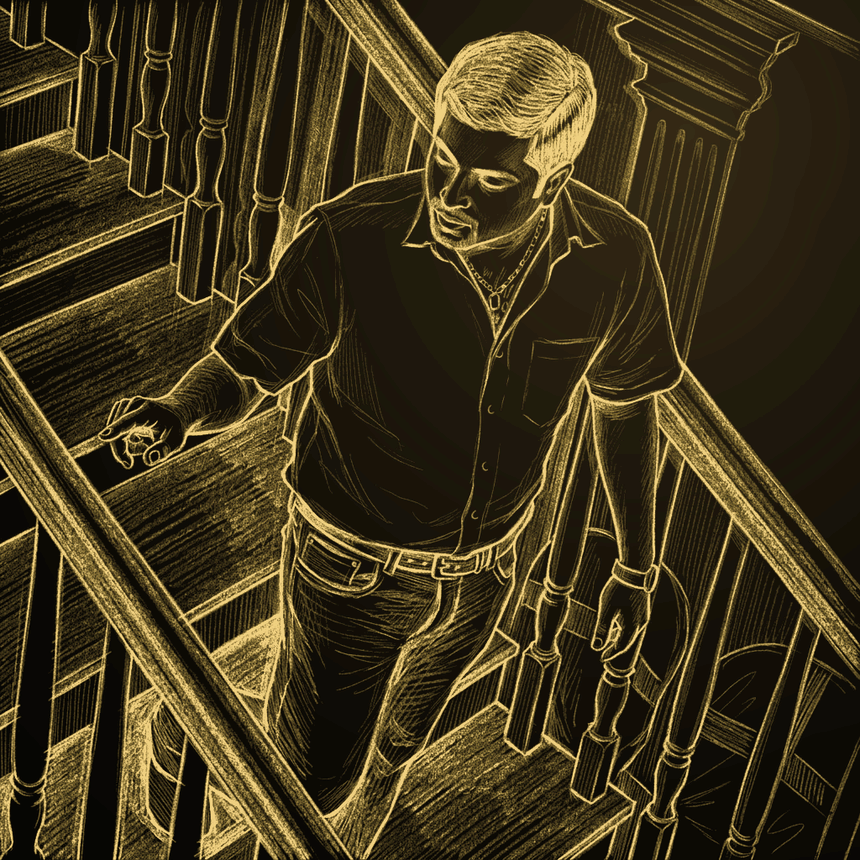
The other day one of you asked me for a new watch. I said no — both of you already have two each — and instead of leaving it there, I asked you to go away and think about one simple question: is another watch a need, or a want? I could tell it wasn’t the answer you were hoping for. I’m not writing this to make you feel bad about that. Wanting things is human; I do it too. But it made me want to show you something — not lecture you, just show you — about the life you were born into, and how rare it actually is. Because I don’t think you can see it yet. I couldn’t, at your age. So let me take you on a quick walk around the world.
The house you come home to
You have a home. A roof that doesn’t leak, walls that keep the rain out, a room that’s yours, a bed that’s yours. It feels completely ordinary to you, because it’s all you’ve ever known. But more than a billion people live in slums — crowded, makeshift shelters pieced together from whatever could be found — and over 300 million people have no home at all. The house you walk into every evening without a second thought, a huge share of the world’s children will never have.UN·Habitat
The tap, the toilet, and the hot shower
You turn a tap and clean water appears. You use a clean toilet without thinking. You step into a warm shower whenever you like — and ours even has those jets you both think are completely normal. Here’s what’s actually normal for most of the world: more than 2 billion people — one in four — don’t have safe drinking water at home; around 3.4 billion don’t have a safe, private toilet; and 1.7 billion can’t even wash their hands with soap and water at home. In many countries, children your age walk for hours each day just to carry water back for the family. A hot shower, to most people alive, is an unimaginable luxury.WHO / UNICEF
Three meals, without ever wondering
You open the fridge when you’re bored, not just when you’re hungry. You have never once gone to bed not knowing if there’d be food tomorrow. But around 673 million people went hungry last year, and roughly 2.3 billion — nearly one in three people on Earth — could not reliably get enough safe, nutritious food. The meal your mother puts on the table every single night, without fuss, is something millions of parents pray for and cannot manage.UN·FAO
A school to get to — and the ability to read this
Every morning a bus pulls up and takes you to a school four and a half kilometres away, and brings you home again. You can read these words I’m writing. Both of those are rarer than they look. Around 272 million children and young people are out of school entirely,UNESCO and even among those who do attend, more than half the children in low- and middle-income countries cannot read and understand a simple story by the age of ten.World Bank Many children who do go to school have no bus, no safe road, sometimes no building — they walk a long way, in the heat or the rain, just for the chance to sit in a classroom. The fact that you can breeze through this letter, bored of my sentences, is a gift millions never receive.
The small things you never even see
Shoes that fit. A warm blanket on a cold night. Clean clothes in the cupboard. A light that comes on the instant you flip a switch. A doctor and medicine when you’re sick, so that a fever is just a bad week and not a danger. You’ve never once had to think about any of these — which is exactly how I know how fortunate you are. Even that light switch isn’t universal: 730 million people still live with no electricity at all — no bulb after dark, no fan in the heat.IEA
A childhood to actually spend being children
Your days are for school, friends, games, arguments with me, figuring out who you are. That is what a childhood is supposed to be for. But nearly 138 million children are in child labour right now — around 54 million of them in work that is outright dangerous. Children exactly your age are in fields, workshops and mines instead of classrooms, carrying the weight of grown-ups. The freedom you have simply to be young is one of the greatest luxuries on this list.UNICEF / ILO
Peace — the quietest gift of all
You go to sleep to the sound of nothing much. No sirens, no gunfire, no reason to be afraid of the sky. That silence is one of the rarest things on Earth right now: more than 473 million children — over one in six children in the world — are growing up in a conflict zone. A child no different from you, somewhere tonight, is listening to a very different kind of night. You won a peace you did nothing to earn.UNICEF
The two people at the table
And this is the one I most want you to notice, because it’s the one nobody counts. Every single day, you have two parents under the same roof — there in the morning, there at night, taking care of every need you have before you’ve even thought to ask. That feels like the most ordinary thing in the world to you. It is one of the rarest. Around 150 million children have lost one or both of their parents, and close to 18 million have lost both.UNICEF / WHO Millions more are separated from theirs by war, by poverty, by work. The rarest thing you own isn’t the house, or the hot water, or anything you can plug in. It’s us — at the table, every night.
And the ones who came before us
There’s one more, quieter still. You have grandparents — people who knew me as a boy, who hold the whole story of our family in their heads, who light up the moment you walk into the room. Not every child gets that. Many grow up never knowing a grandparent’s face, or lose them far too early. So when they tell you the same story for the third time, sit down and listen. One day those stories, and the people telling them, will be the thing you’d give anything to have back.
What I’m actually asking
I’m not asking you to feel guilty. Guilt is useless; it just makes you feel bad and changes nothing. What I’m asking is simpler and harder: that you see it. That every now and then — when you flop onto your bed, or stand under that hot water, or sit down to a dinner your mother made — you feel, just for a second, how astonishingly fortunate you are.
Because here’s the truth none of us likes to say out loud: you didn’t earn any of this. You did nothing to deserve being born into this house, to this family, in this country — exactly as a child born into a slum, or a war, did nothing to deserve being born there. It’s luck. Pure, undeserved luck. And when you understand that your good fortune was a gift and not a wage, two things happen. You stop taking it for granted. And you grow gentle with the people who were handed far less, because you know it could just as easily have been you.
That’s all I want for you. Not guilt — gratitude. Not less joy in what you have, but more. So go on — have your shower, eat your dinner, play your game, slam your door if you must. Just know, every once in a while, how lucky you are. Luckier than you know. And maybe, next time, the answer to “need or want?” will come to you a little more easily.